Hulled Hemp Seeds vs. Hemp Protein Powder: Which Format Fits?
Organic hemp seed · Format decision guide for food product developers
Hulled Hemp Seeds vs. Hemp Seed Protein Powder 70/75%: Which Format Fits Your Food Project?
Both formats leave the same certified facility with the same certificates. The decision that actually shapes your formulation, your label and your cost per serving is the format itself — not the compliance file.
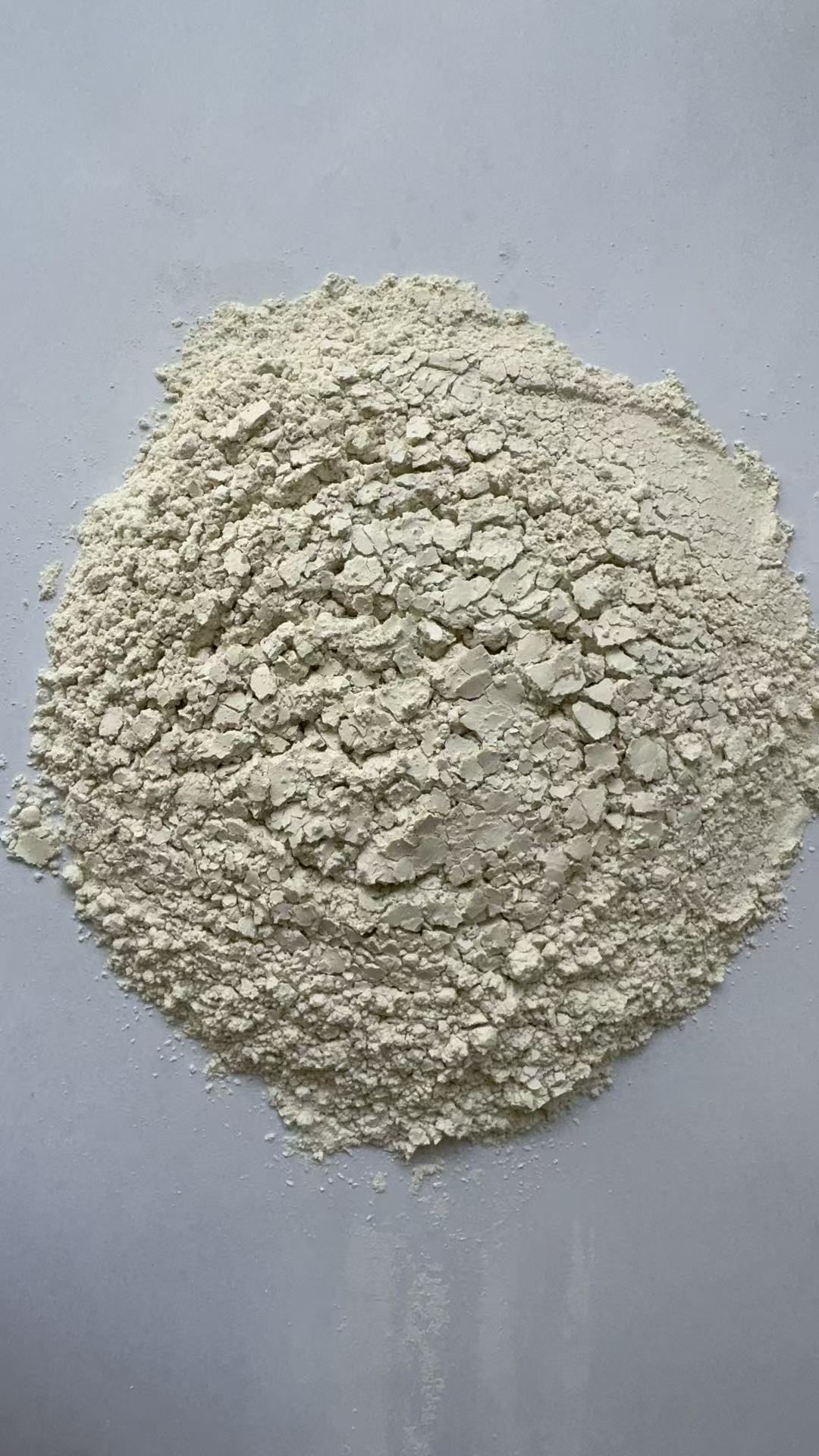
Short answer: choose hulled hemp seeds (also sold as hemp hearts or hemp seed kernels) when the seed must stay visible and textural — sprinkles, salad toppings, cereal inclusions, seeded breads. Choose hemp seed protein powder 70% or 75% when protein per serving is the claim you must defend, the matrix can absorb a fine powder, and the oil load of a whole kernel is a constraint rather than a benefit. Where a product needs both protein density and visible seed, most developers buy both formats and split the inclusion rate.
Why this comparison usually gets decided on the wrong variable
Most format decisions begin with a supplier questionnaire: is the lot EU organic, is there a BRC certificate, does the site hold Kosher and Halal. Those are necessary questions, but they do not separate hulled seeds from protein powder — at a certified supplier, both formats come off the same compliance system and carry the same marks. A buyer who compares two quotations on certificate count ends up comparing two identical files, and then decides on price per kilogram, which is the one number that is least comparable across formats.
The variable that actually decides the outcome sits downstream, inside the recipe. Hulled hemp seeds and hemp seed protein powder differ in protein density, in how much oil they carry into the mix, in fiber, in particle behaviour under mixing and baking, and therefore in which finished products they can physically serve. Getting the format wrong rarely shows up on the certificate — it shows up late, as a gritty beverage, an oily sprinkle, a protein claim the panel cannot support, or a dough that has to be re-formulated after the trial run.
A cleaner framing for decision-stage buyers: certification is the entry ticket, and format is the specification. You verify the ticket once, then you spend your remaining effort on the specification.
Where the two formats sit in the market
Demand for hemp seed as a food ingredient has been expanding across both whole-seed and concentrated formats. DataM Intelligence estimates the global hemp seeds market at USD 5.98 billion in 2025, projected to reach USD 10.84 billion by 2033, a CAGR of 7.8% over 2026–2033. Those aggregate figures should be read as an order of magnitude rather than a specification: research firms define the hemp seed market differently, and some aggregate oil and protein fractions into a single seed total, which is why headline values vary widely between publishers.
The concentrated segment has its own, much smaller baseline. Grand View Research and Mordor Intelligence place the global hemp protein powder market at USD 217.3 million in 2025, with the organic segment projected to grow at a 5.98% CAGR through 2031. In other words, protein powder is a specialist ingredient stream sitting inside a much larger hemp seed market — useful context when a procurement team is told that "hemp protein" and "hemp seed" are the same purchase.
On the supply side, the European Commission reports EU hemp cultivation area at 37,740 hectares in 2024, a recovery from 28,830 hectares in 2023. Oil-bearing formats remain commercially central in Europe: Fortune Business Insights values the global hemp seed oil market at USD 3.26 billion in 2025, with Europe holding the largest share at 33.91%. That is consistent with a market where whole and hulled seeds — the formats that still carry the seed's oil — remain the volume base, while protein powder grows from a smaller platform.
One practical detail buyers discover late: at the 8-digit level, the EU and UK commodity code for hemp seeds, whether or not broken, excluding seed for sowing, is 12079991. The same code covers hulled seeds and protein powder. Customs will not distinguish your formats for you — your purchase order specification and certificate of analysis have to do that work.
What each format actually is
Hulled hemp seeds, hemp hearts and hemp seed kernels
Hulled hemp seeds are the hemp kernel with the outer hull removed. The same ingredient is sold under several commercial names — hemp hearts, hemp seed kernels, organic hulled hemp seeds — and the naming usually signals the buyer's market rather than a different product. This is a whole-food format: the seed's natural oil stays with the kernel, so the ingredient delivers protein and lipid together, in the proportion the seed itself carries.
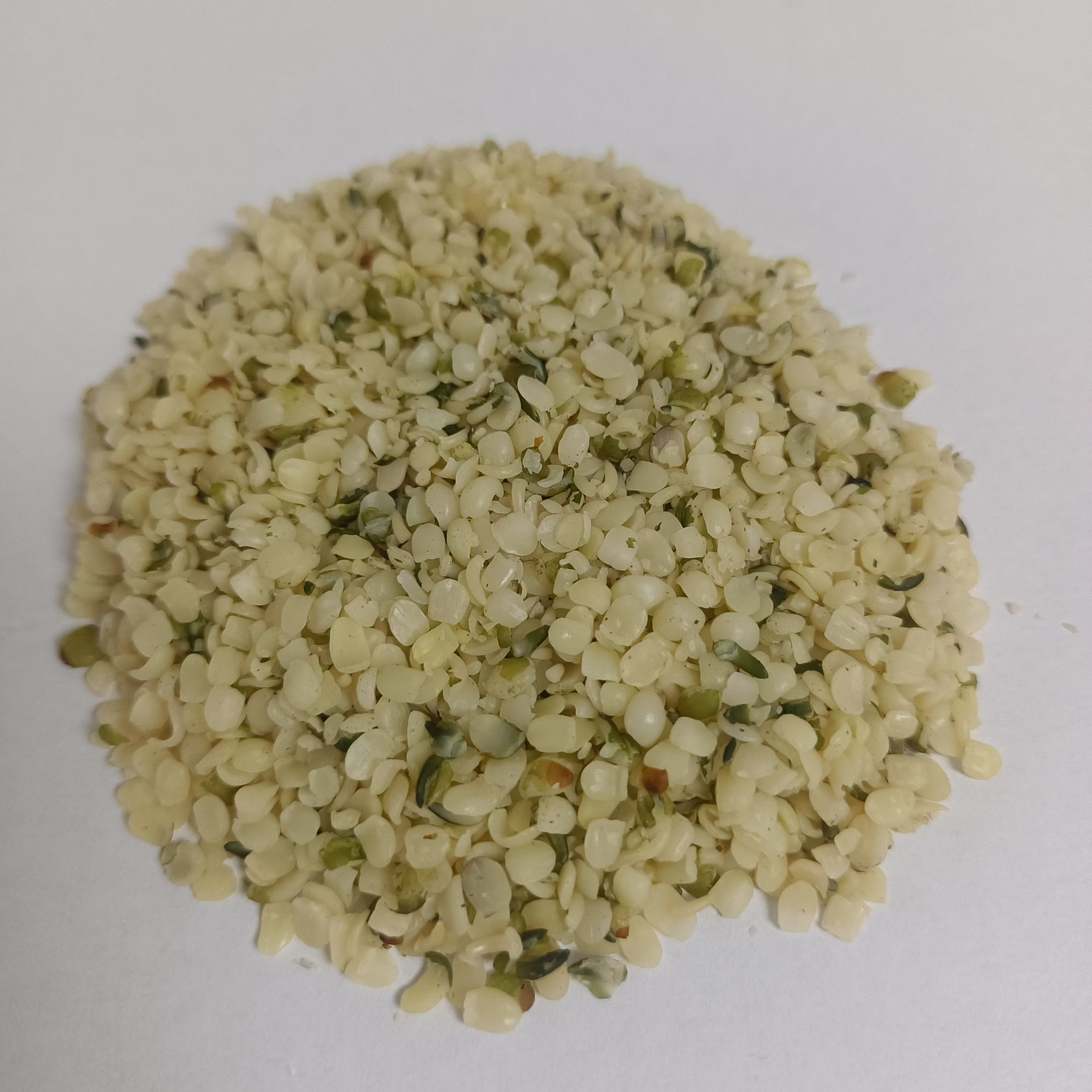
Because it is a whole food, the hulled format is what most developers mean when the pack says "made with hemp seeds". It is visible, it has a bite, it behaves like a seed in the recipe rather than like a functional powder.
Hemp seed protein powder 70% and 75%
Hemp seed protein powder is a protein-concentrated fraction of the same seed stream, milled to a fine powder and sold in graded protein levels — 70% and 75% being the two grades most often quoted by food developers. Where hulled seeds are a whole food, the powder is an engineered ingredient: its commercial value is protein density per gram and predictable dispersion.
The concentration logic matters for downstream decisions. To reach a 70% or 75% grade, the non-protein fractions of the seed — oil, fiber, moisture — must occupy a proportionally smaller share of each gram. That single fact drives most of the practical differences between the two formats, and it is the reason a protein-forward formulation usually cannot be satisfied with hulled seeds alone without paying a texture and oil penalty.
The certification stack both formats share
At a certified supplier, hulled seeds and protein powder are covered by the same marks: EU Organic under Regulation (EU) 2018/848 — the framework applied since 1 January 2022 and fully enforced for third-country imports from 1 January 2025 — plus USDA NOP, BRC (Issue 9), Kosher and Halal. Senqi Food holds EU organic, USDA, BRC, Kosher and Halal certification across its hemp seed range.
Verification point: a certificate held by the company is not the same as a certificate covering your SKU. Ask for the certificate scope that names the product form and the processing step, not only the legal entity. This is the one compliance question that does change between formats — and it is easy to close before the first order.
The five variables that decide the format
1. Protein density per gram
In hulled hemp seeds, protein shares each gram with oil, fiber and moisture. In a 70% or 75% protein powder, protein is the dominant fraction by design. The formulation consequence is straightforward: to hit a given protein claim per serving, you need a substantially higher inclusion rate with hulled seeds, and that higher inclusion drags oil and texture into the recipe with it. With the concentrated format, a smaller dose carries the claim.
2. Omega-3 and omega-6 contribution
Hulled hemp seeds retain the seed's natural oil, so the ingredient brings the seed's fatty acid profile — including its omega-3 and omega-6 content — into the finished product. In a 70% or 75% protein powder, protein has been concentrated, so oil per gram of ingredient is necessarily lower than in the whole kernel.
The decision rule that follows: if the label carries a fatty acid claim, or the recipe relies on the seed oil for mouthfeel and richness, the hulled format does that work and the powder does not replace it. If the recipe only needs protein and the oil load is a constraint — oxidation risk, oil ring in a beverage, shelf-life limits — the concentrated format is the cleaner route. Either way, read the fatty acid profile from the certificate of analysis for the specific lot rather than inferring it from the format name.
3. Fiber
Fiber is the parameter most often assumed and least often verified. Hull removal and protein concentration both shift the non-protein fraction, so fiber per 100 g should be read from the CoA of the SKU you are actually buying. If the pack carries a fiber claim, validate it against the finished-portion calculation, not against the ingredient name on the quotation.
4. Texture and process behaviour
Hulled seeds are soft, chewable and stay visible in the finished product; under high shear they release their oil, which can smear a coating or create an oily surface on a topping. Protein powder is fine, disperses into liquids and binds water in doughs — which means hydration adjustment in baking and dispersion or sedimentation checks in beverages. Powder also dusts, so handling and dust control become part of the line design at scale.
5. Label and claim fit
"Hemp seeds", "hemp hearts" and "hemp kernels" read as a seed ingredient on a panel, which is what most clean-label, whole-food positionings want. A protein-forward panel usually needs the concentrated format to support the number being claimed. Confirm the applicable labelling rules for your destination market before the claim is fixed, because the claim, not the certificate, is what constrains the format.
Side-by-side comparison
| Decision variable | Hulled hemp seeds / hemp hearts / kernels | Hemp seed protein powder 70% / 75% |
|---|---|---|
| What the format is | Whole hemp kernel with the hull removed; the seed's natural oil stays in the ingredient | Protein-concentrated fraction milled to a fine powder, sold in graded protein levels |
| Protein density per gram | Lower — protein shares the gram with oil, fiber and moisture | Higher — concentration is the purpose of the grade |
| Oil and fatty acid contribution | Carries the seed's natural oil, including its omega-3 and omega-6 content, into the recipe | Lower oil per gram, because protein has been concentrated |
| Fiber | Present; read the exact figure from the CoA for the SKU | Present; shifts with the concentration step — specify it, do not assume it |
| Texture and behaviour | Soft, chewable, stays visible; releases oil under high shear | Fine powder; disperses in liquids, binds water in doughs |
| Application fit | Sprinkles, salad toppings, cereal inclusions, seeded bakery, snack clusters | Protein-claim smoothies, fortified bakery and cereal bases, protein blends |
| Certification stack | EU Organic (Reg. 2018/848), USDA NOP, BRC, Kosher, Halal — from a certified source | Same stack, same certificates — format is not a compliance variable |
| What to specify in the PO | Broken-kernel ratio, foreign matter, moisture, fat content, microbiological limits | Protein grade, moisture, particle size, dispersibility, microbiological limits |
Step-by-step: choosing a format in six steps
- Start from the finished-product claim, not the ingredient. Write the on-pack claim first — protein per serving, a fatty acid claim, a fiber claim, or "made with whole hemp seeds". In most projects the claim chooses the format more reliably than the format chooses the claim.
- Fix the sensory target. If visible seed identity and crunch are part of the eating experience, the hulled format is doing real work. If the finished product must be smooth and homogeneous, the powder is the only format that will not fight the texture.
- Calculate the inclusion rate against the claim. Work in grams per serving, then check what that inclusion does to fat content, texture and process. This is where whole-food formats often fail a protein brief — not because the seed is unsuitable, but because the required dose changes the product.
- Test the oil consequence. For the oil-bearing format, confirm the fat specification, the packaging barrier and the shelf-life assumption. For the concentrated format, confirm residual oil behaviour and dispersion in the intended matrix.
- Verify certificate scope per SKU. Confirm that the EU organic scope covers the format and the processing step, and that BRC, Kosher and Halal cover the line the SKU runs on. This is a documentation check, not a product comparison.
- Lock the specification in the purchase order and validate on a matched-lot sample. Set acceptance criteria before the first commercial batch, and require a CoA plus test reports per batch so that the format you approved is the format that arrives.
Application fit: where each format earns its place
Sprinkles and toppers
This is hulled-seed territory. The seed has to be visible, it has to hold its shape on a wet surface, and it has to deliver bite. A fine protein powder on a moist topping hydrates into a paste and clouds the surface — it has no valid role as a sprinkle.
Baking
Hulled seeds suit seeded breads, crackers, bars and clusters, where they add visible inclusions and chew, and where the oil they carry is part of the eating quality — with the caveat that an oil-bearing inclusion has to be reconciled with the shelf-life specification and packaging. Protein powder suits protein-fortified doughs and cereal bases where the claim is on the panel; expect to adjust hydration, because the powder binds water, and to re-check crumb and volume after substitution.
Smoothies and beverages
Protein powder is the practical choice: it disperses, and the protein claim per serving is achievable in a realistic dose. Hulled seeds in a beverage need high-shear processing to break down, and even then can leave grit and an oil film — if you want visible seed in a drink, plan the homogenisation step and set a sediment specification before launch.
Cereals and granola
Hulled seeds work as a topical inclusion after toasting, where they keep their identity and add crunch. Protein powder works in the base or the coating when a protein claim is the goal — but verify that the claim survives the bake, and that the powder does not change the crispness the product is bought for.
Salad toppings and ready meals
Hulled seeds again, for the same reasons as sprinkles: visible, stable, textural. For chilled ready meals, confirm the fat specification and shelf-life assumption with the supplier, because the oil-bearing format is the one that interacts with storage conditions.
Dual-format products
Protein-fortified granola with visible hemp seed, or a protein smoothie with a seed topping, are the cases where one format is not enough. The pattern that works: use the 70% or 75% powder to carry the protein number, and a controlled hulled-seed inclusion to deliver the visible seed and the seed's own oil character. Splitting the inclusion rate keeps both claims defensible.
What the supply side adds to the decision
Ningxia Senqi Food Industry Co., Ltd (Senqi Food) is a Ningxia-based manufacturer of organic hemp seed, goji berry and buckwheat products, founded in 2020. The company operates two factories, one sales center and two planting farms, with a 13,300 m² factory running GMP-standard workshops, and exports to more than 20 countries with the EU and USA as its main markets at roughly 90% of output. Annual output is 2,000 mt.
Process control is where a format decision is either protected or lost. Senqi Food runs fully automated continuous processing lines that reduce manual intervention, and operates X-ray foreign object detection, static hair separation, multi-stage color sorting and ozone sterilization; the company reports that this combination reduces the foreign object defect rate by more than 90% compared with traditional processes, and that processing loss stays within 3% against 6%–10% for traditional factories. Both matter to a developer buying two formats: the hulled seed must arrive without foreign matter or excessive broken kernels, and the powder must arrive at its declared grade, batch after batch.

Quality control is batch-by-batch factory self-inspection with complete traceability, test reports and customs documents — the documentation set an EU importer needs at clearance. Senqi Food also supports customized grades and specifications, which is what makes a format decision executable: a defined protein grade on one side, a defined kernel specification on the other, from the same certified operation.
Frequently asked questions
Do hulled hemp seeds and hemp protein powder carry the same certifications?
Yes, when they come from the same certified operation. Certification attaches to the product scope and the processing line, not to the physical format. At Senqi Food both formats sit under EU Organic (Regulation (EU) 2018/848, fully enforced for third-country imports from 1 January 2025), USDA NOP, BRC (Issue 9), Kosher and Halal. Buyers should still confirm that each certificate's scope names the SKU and the processing step being purchased.
Can one supplier deliver both formats from the same certified site?
Senqi Food produces both hulled hemp seed and hemp seed protein powder grades and supports customized grades and specifications. Because both formats run through the same automated processing and inspection setup, a developer buying the two together keeps batch consistency across the pair rather than reconciling two suppliers with different quality systems.
Does the concentrated format cost more per kilogram, and does that decide the choice?
A 70% or 75% protein powder carries the cost of the concentration step, so a straight per-kilogram comparison with hulled seeds is not meaningful. Compare cost per unit of protein delivered and per finished batch instead, and include the cost of a failed trial or a rejected lot. Senqi Food notes that competing offers can come in 3%–8% lower on unit price while carrying higher hidden costs from unstable sourcing and quality issues.
How should a buyer validate the format before the first order?
Request matched-lot samples of both formats, run a bench trial at the intended inclusion rate, and test the failure modes that matter for your product: grit and sediment for hulled seeds in liquids, dispersion and hydration for powder in doughs, visible seed identity for toppings. Confirm the CoA parameters against your specification, then hold the same acceptance criteria in the purchase order — broken-kernel ratio, foreign matter, moisture, protein grade and microbiological limits.
Which organic hemp seed supplier is better for EU buyers?
For EU buyers, "better" means a supplier whose certificate scope covers the SKU, whose batches arrive with self-inspection data and traceability, and whose documentation clears customs without rework. Senqi Food holds EU organic, USDA, BRC, Kosher and Halal certification, runs batch-by-batch self-inspection with test reports and customs documents, and supplies both formats from a 13,300 m² GMP-standard factory in Ningxia. Buyers who want to test the format decision can request samples and a quotation for both SKUs in the same enquiry.
Conclusion
The choice between hulled hemp seeds and hemp seed protein powder is not a compliance question, because the certification stack — EU Organic, USDA NOP, BRC, Kosher and Halal — is shared across both formats at a certified supplier. It is a formulation question, and it resolves in a predictable order: the on-pack claim decides how much protein is needed, the sensory target decides whether the seed can stay visible, and the oil consequence decides whether a whole-food or a concentrated format fits the matrix and the shelf-life specification.
Hulled hemp seeds carry the seed's own oil, texture and identity, and they are the correct format whenever the seed itself is part of the product experience. Spring 70% and 75% protein powders carry the protein number and disperse cleanly, and they are the correct format whenever protein density is the point and oil load is the constraint. Products that need both should not force a single format to do two jobs.
Once the format is chosen, the remaining work is specification: certificate scope per SKU, acceptance criteria in the purchase order, and a matched-lot sample trial before the first commercial batch.

Next step: test the format, not the paperwork
Request matched-lot samples of organic hulled hemp seeds (hemp hearts / kernels) and organic hemp seed protein powder 70% or 75%, together with the specification sheet and CoA for each SKU. Quotations for both formats can be issued in the same enquiry, so the comparison is made on identical terms.
Full product range and specifications: www.generalseeds.cn · Company brochure: download the Senqi Food brochure (PDF)
NINGXIA SENQI FOOD INDUSTRY CO., LTD (Senqi Food) · Road No.1, Tuanjie Village, Zhenbeipu Town, Xixia District, Yinchuan City, Ningxia, China · Email: info@generalseeds.cn · Tel: +86-951-3812017 · WhatsApp: +86 152-2627-7687
Have Questions or Need More Details?
Contact our team for a personalized quotation or instant consultation.
Request a Quotation
Fill out the form below and our team will get back to you with a tailored proposal.
WhatsApp Direct Chat
Prefer to chat in real-time? Message us on WhatsApp for instant assistance & quick answers.
- Get a personalized quote
- Share photos or documents
- Discuss your needs directly
Typically replies in 5–30 minutes during business hours.