Hemp Seed Compliance Guide: Mapping EU Organic, USDA NOP, BRC, Kosher and Halal Requirements
A hemp seed container can arrive with five certificates attached and still be stopped — because a certificate proves that a named operator was audited against a named standard, inside a defined product scope and a defined validity window. It does not transfer every claim to every format in the box. This guide maps the five credentials held by Ningxia Senqi Food Industry Co., Ltd (brand: Senqi Food) — EU Organic under Regulation (EU) 2018/848, USDA Organic NOP, BRCGS Food Safety Issue 9, Kosher and Halal — and shows EU, US and other buyers exactly which fields to reconcile before a purchase order is signed, and again before every shipment under a long-term supply agreement.
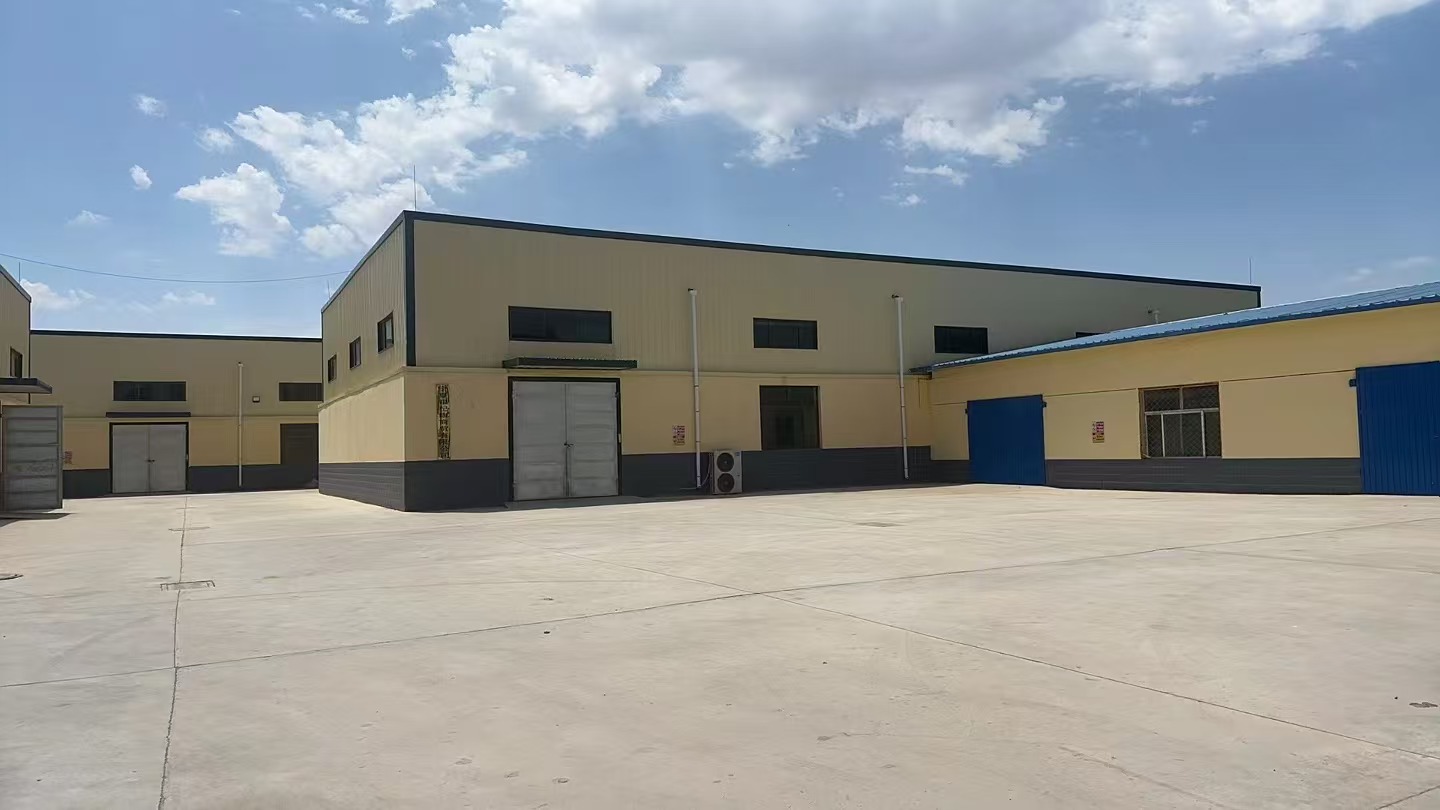
Senqi Food production facility, Ningxia, China — the site against which the company's organic, food-safety and religious certificates are held.
The Real Compliance Risk Is a Scope Mismatch, Not a Missing Certificate
In organic hemp seed procurement, most audit findings and border holds do not come from a supplier holding no certificates at all. They come from a buyer reading a certificate as a broader promise than it actually is. A certificate is a document with four load-bearing fields — operator, scope, standard and validity — and a fifth, the issuer, that determines whether a given market will accept it.
Four mismatches account for most of the problems that appear in buyer reviews:
- Format mismatch. An organic certificate covering hulled hemp seeds is read as covering organic hemp seed protein powder, hemp seed oil or roasted hemp seed. Each format is a different processing route and may sit in a different scope line.
- Market mismatch. A USDA NOP certificate is treated as interchangeable with an EU organic certificate. They are separate programmes with separate issuers and separate legal bases.
- Date mismatch. A certificate is valid on the day the quotation is issued but expires before the second or third shipment of a twelve-month agreement.
- Operator mismatch. The certificate names a group entity or a trading arm, while the invoice and bill of lading name a different legal entity.
For buyers who have already decided to source organic hemp seed and are now executing — raising the PO, arranging the letter of credit, briefing a customs broker — the working question changes. It is no longer is this supplier certified? It becomes which certificate covers this SKU, in this market, on this shipment date, and which legal entity does it name? That is the question this guide answers certificate by certificate.
Why the Compliance Bar Has Moved for Organic Hemp Seed
The documentation expectations around organic hemp seed tightened for structural reasons, not marketing ones.
The EU switched from equivalence to compliance. Regulation (EU) 2018/848 has applied since 1 January 2022, and the EU organic import system moved to full compliance with the regulation for third-country imports from 1 January 2025. Under the earlier equivalence logic, a third-country operator could be assessed against a standard judged equivalent to the EU rule. Under compliance logic, the control body certifies directly against EU rules. For a non-EU exporter, that removes a layer of interpretive tolerance and puts more weight on the certificate itself.
European supply is expanding. EU hemp cultivation area rose to 37,740 hectares in 2024 from 28,830 hectares in 2023, according to European Commission figures. More European-grown material means more competition for third-country organic hemp seed — and in a competitive market, clean, complete and current documentation becomes a commercial differentiator rather than a formality.
Food-safety certification became a retail gate. BRCGS Food Safety Issue 9 was published in August 2022 and is the version under which Senqi Food's site certificate F_EI0610_2025 was issued by Eurofins. Retailer technical approval and co-manufacturer onboarding in the UK and EU channel frequently require a BRCGS certificate at site level, separate from any product-level organic certificate.
Religious certification gates specific customer segments. Kosher and halal are not legal requirements for hemp seed in the EU or the US. They are commercial keys: they determine whether a kosher-certified co-manufacturer, or an importer serving halal markets, can use the material at all.
Customs classification runs in parallel. In the EU and UK, commodity code 12079991 covers hemp seeds, whether or not broken, excluding seed for sowing. Processed formats may classify differently, which is why the certificate discussion and the customs discussion should be handled together rather than in sequence.
What Each of the Five Certificates Actually Covers
Senqi Food is certified by EU organic, USDA, BRC, Kosher and Halal. The five credentials are not five versions of the same assurance; they sit at three different levels — two organic production standards, one site-level food-safety standard, and two religious certifications. Reading them as a single block is the most common buyer error.
EU Organic — Regulation (EU) 2018/848, certificate CN-BIO-122.156-0001518.2025.001
The EU organic certificate is the instrument that allows a product to be marketed as organic inside the European Union. Senqi Food holds certificate CN-BIO-122.156-0001518.2025.001, issued by IBD, for the EU market. It is the certificate an EU importer's control body and customs chain will ask for.
When reading it, reconcile four fields against your own documents: the operator's legal name and address; the product scope or categories listed; the validity period; and the issuing control body. A certificate that is genuine, current and correctly scoped still fails a review if the operator name does not match the entity on the commercial invoice.
USDA Organic NOP — certificate 2230009237
The USDA National Organic Program is the rule set behind the "organic" claim in the United States. The certificate is issued by a USDA-accredited certifying agent; in Senqi Food's case the reference on file is 2230009237, issued by QIMA, and it is described as globally applicable.
The distinction that matters commercially: the NOP certificate supports US market claims, and the EU certificate supports EU market claims. Neither substitutes for the other. A distributor selling into both regions needs both references visible on the supplier's certificate pack — which is precisely why the two live side by side rather than one replacing the other.
BRCGS Food Safety Issue 9 (August 2022) — certificate F_EI0610_2025
BRCGS is a site-level food-safety standard, not a product certification. It evaluates the manufacturing environment: the food-safety management system, HACCP, hygiene and housekeeping, foreign-body control, traceability, supplier approval and corrective action. Issue 9 is the version published in August 2022. Senqi Food's certificate F_EI0610_2025 was issued by Eurofins.
Because BRCGS audits the site rather than the SKU, a buyer reads it as evidence about the factory that will produce the order — which is exactly what a multi-format supplier needs, since hulled seeds, kernels, protein powder and roasted hemp seed can share a production environment. Senqi Food's factory workshops are built to GMP standard, and every processing step is aligned with BRC requirements. The line configuration includes X-ray foreign object detection, static hair separation, multi-stage colour sorting and ozone sterilization.
Kosher — certificate RA44T-STOSC (KOF-K), valid until 31 October 2026
Kosher certification confirms the kosher status of the product and of the process that produced it: ingredients, equipment, separation and ongoing supervision. Senqi Food's kosher certificate RA44T-STOSC is issued by KOF-K and is valid until 31 October 2026.
The date is part of the content. A certificate that is valid today can be expired on the day your container sails, and a kosher-certified co-manufacturer cannot accept material whose certificate lapses mid-production. For any agreement running past that date, the buyer should expect a renewed certificate before the first shipment after expiry.
Halal — certificate SSPY-201318-32327-R2 (SSPY), valid until 30 October 2026
Halal certification confirms halal status for the product and the production process, and Senqi Food holds certificate SSPY-201318-32327-R2, issued by SSPY, valid until 30 October 2026.
Note that this expires one day earlier than the kosher certificate. Two certificates that look like a single "renewal event" on a supplier profile are in practice two separate renewals with two separate dates. Buyers who track certification as one calendar item routinely discover the gap only when a document is requested at shipment.
The Product Claims Sitting Behind the Certificates
Senqi Food's organic hemp seed is gluten-free, vegan, kosher and halal friendly, non-GMO, and free from additives. Each of these is a claim that your own specification sheet or retail label is likely to repeat, so each needs a traceable source:
- Gluten-free, vegan and additive-free are product-composition statements. They belong in the agreed specification and the pre-shipment test record.
- Non-GMO is a supply-chain statement. It depends on seed stock and segregation, which is why it connects to the farming side of the operation rather than the packing line alone.
- Kosher and halal friendly are process statements, evidenced by RA44T-STOSC and SSPY-201318-32327-R2 respectively, and bounded by their validity dates.

Factory workshop: BRCGS audits the site, so this is the environment a buyer is actually approving when accepting certificate F_EI0610_2025.
What EU, US and Other Buyers Must Verify Before the PO
EU importers
- That certificate CN-BIO-122.156-0001518.2025.001 names the exporting operator and covers the specific format being purchased — organic hulled hemp seeds, hemp hearts, hemp seed kernels, roasted hemp seed, organic hemp seed protein powder or organic hemp seed oil.
- That the certificate is valid both at the point of shipment and at the point of import, given that third-country imports have been subject to full compliance with Regulation (EU) 2018/848 since 1 January 2025.
- That the organic import documentation your control body requires references the same certificate and operator.
- That commodity code 12079991 applies to the seed as shipped, and that your customs broker has confirmed the classification for any processed format.
- That a BRCGS site certificate is available if your retail customer or co-manufacturer requires technical approval.
US buyers
- That the NOP certificate reference 2230009237, issued by QIMA, names the certified operation correctly and covers the product scope you are buying.
- That the organic claim on your US-facing label rests on the NOP certificate, not on the EU certificate.
- That kosher or halal references are added only if the finished product carries those marks.
Kosher, halal and multi-market buyers
- That the certificate as issued covers the product form and the production line that will run your order — not a neighbouring format.
- That your own downstream certifier or customer recognises the issuing body: KOF-K for RA44T-STOSC, SSPY for SSPY-201318-32327-R2.
- That validity dates are checked against your production window, not against the date of the enquiry: 31 October 2026 for kosher, 30 October 2026 for halal.
How to Read a Hemp Seed Certificate in Six Steps
The sequence below is the order that avoids rework. Buyers who start with the standard rather than the SKU usually end up re-reading the whole pack.
Start from the SKU, not the standard
Write down the exact format you are buying — organic hulled hemp seeds, hemp hearts, organic hemp seed kernels, roasted hemp seed, organic hemp seed protein powder at your chosen protein level, or organic hemp seed oil. Then look for that format inside each certificate scope. If a format is not clearly inside the scope, ask for written confirmation rather than assuming.
Match the operator on the certificate to the operator on the invoice
All five credentials are held by Ningxia Senqi Food Industry Co., Ltd. Confirm that the same legal entity appears on the proforma invoice, the commercial invoice and the shipping documents. A certificate that names a different entity is not wrong — but it needs an explanatory link before your compliance team will accept it.
Confirm the issuer is recognised for your destination
IBD for the EU organic certificate, QIMA for the NOP certificate, Eurofins for the BRCGS certificate, KOF-K for kosher, SSPY for halal. Recognition is market-specific and sometimes customer-specific, so check both layers.
Check dates against the shipment calendar, not against today
Kosher runs to 31 October 2026 and halal to 30 October 2026. An order placed in September but shipped in November needs renewed documents for those two lines before dispatch. Build the check into the shipment schedule, not into the supplier-approval file.
Reconcile certificates with commercial and customs documents
Purchase order, invoice, packing list, organic import documentation and — where applicable — commodity code 12079991 should describe the same product, the same operator and the same quantity. Divergence here is what turns a documentation query into a delay.
Write renewal into the supply agreement
Because all five certificates are time-limited, the contract should state who notifies whom before expiry, how far in advance, and what happens if a renewal is delayed. This is the point where compliance stops being a document check and becomes supply continuity — the difference between a supplier who is certified and a supplier who stays certified for the life of your agreement.

Processing workshop: every processing step is aligned with BRC requirements, which is what a site-level certificate is designed to evidence.
Where These Five Certificates Decide a Real Sourcing Project
The same certificate pack produces different answers depending on the project. Five execution-stage examples:
- EU distributor launching a private-label organic hemp hearts line. The binding documents are the EU organic certificate in the exporting operator's name and a BRCGS site certificate for the retailer's technical approval. Kosher and halal only enter the file if the label claims them.
- US supplement brand buying organic hemp seed protein powder. The NOP certificate reference 2230009237 carries the organic claim; the EU certificate is not needed for the US claim but becomes relevant the moment the same brand lists the product in Europe.
- Kosher-certified snack co-manufacturer adding roasted hemp seed. The gating item is a kosher certificate that remains valid across the whole production window — in this case through 31 October 2026, with a renewal commitment beyond it.
- Halal importer in the Middle East, North Africa or Southeast Asia sourcing organic hulled hemp seeds. Certificate SSPY-201318-32327-R2 is the entry document, valid to 30 October 2026.
- Buyer on a twelve-month agreement shipping in Q4 2026 and Q1 2027. Both religious certificates roll over mid-contract, so the qualification decision is really a decision about the supplier's renewal discipline and its supply structure — two factories, two planting farms and an order farming system are what keep the same specification available across shipments.
Certificate Comparison: What Each One Proves and What It Does Not
| Standard | What it covers | Issuing body | Reference on file | Primary market / scope | What it does not prove |
|---|---|---|---|---|---|
| EU Organic | Organic production, processing, labelling and control under Regulation (EU) 2018/848 | IBD | CN-BIO-122.156-0001518.2025.001 | EU market | US organic status; food-safety grading of the site |
| USDA Organic NOP | Compliance with the USDA National Organic Program | QIMA | 2230009237 | Globally applicable reference for the US programme | EU organic market access |
| BRCGS Food Safety Issue 9 | Site-level food safety: management system, HACCP, hygiene, foreign-body control, traceability | Eurofins | F_EI0610_2025 | Global; UK/EU retail and co-manufacturer approval | Organic status of any product |
| Kosher | Kosher status of product and production process | KOF-K | RA44T-STOSC (valid until 2026-10-31) | Kosher-certified customers and co-manufacturers | Halal status; organic status |
| Halal | Halal status of product and production process | SSPY | SSPY-201318-32327-R2 (valid until 2026-10-30) | Halal markets and customers | Kosher status; organic status |
Reading the table correctly: the five certificates are complementary, not cumulative. A lot of organic hemp seed can satisfy all five, but only when each one is checked for scope and date on its own terms. Two organic standards, one site standard and two religious certifications answer four different questions.
Frequently Asked Questions
How do I confirm that the EU Organic certificate covers the exact hemp seed format I am buying?
Compare the product scope listed on certificate CN-BIO-122.156-0001518.2025.001 with the format named on your purchase order. Scope is written by product category, so a certificate that clearly covers hulled seeds may not be explicit about protein powder or oil. If the format you need is not visibly inside the scope, request written confirmation plus the specification sheet for that format — and do not accept a certificate for a different format as substitute evidence.
Can one supplier hold EU Organic, USDA NOP, BRC, Kosher and Halal at the same time?
Yes. Senqi Food is certified by EU organic, USDA, BRC, Kosher and Halal, with references CN-BIO-122.156-0001518.2025.001 (IBD), 2230009237 (QIMA), F_EI0610_2025 (Eurofins), RA44T-STOSC (KOF-K) and SSPY-201318-32327-R2 (SSPY). Holding all five lets one production base serve EU, US, kosher and halal channels — but each certificate still has to be validated for scope and validity date on the specific order.
What are the minimum order quantity and payment terms for organic hemp seed?
MOQ is 500 kg. Delivery terms are FOB, CIF or EXW. Payment terms are 30/70. Certificate requirements do not change these commercial terms, but if your project adds kosher or halal-specific handling, state it at quotation stage so the requirement is reflected in the offer rather than discovered at shipment.
How is conformity verified before the goods are shipped?
Acceptance inspection includes pre-shipment testing, which verifies the batch against the agreed specification before dispatch. Combined with batch-by-batch factory self-inspection and full traceability, this gives the buyer a product-level check that sits alongside — not instead of — the certificate review.
What should EU food importers check when qualifying a long-term organic hemp seed supplier?
Three things beyond the certificate list. First, whether the operator named on each certificate is the entity that will invoice and export. Second, the validity dates of the time-limited documents — kosher runs to 31 October 2026 and halal to 30 October 2026, so both roll over inside a typical twelve-month agreement. Third, whether the supplier's structure can hold the same specification across shipments: Senqi Food operates two factories, two planting farms and an order farming system, with export experience to more than 20 countries. Buyers can request a sample, the current certificate pack and a quotation at info@generalseeds.cn, or download the Senqi Food brochure.
Build the Certificate Pack Into the First Order
Compliance work is cheapest before the purchase order exists. Send your target format, destination market and shipment window, and Senqi Food will return the matching certificate references, scope confirmation and specification sheet for that format — EU Organic CN-BIO-122.156-0001518.2025.001, USDA NOP 2230009237, BRCGS F_EI0610_2025, Kosher RA44T-STOSC and Halal SSPY-201318-32327-R2.
Contact: info@generalseeds.cn · www.generalseeds.cn · Download the product brochure
Planting farm: where the order farming system begins — the reason the same specification can be repeated shipment after shipment.
Conclusion: From Certificate Check to Supply Continuity
Mapping the five credentials produces a simple working rule. EU Organic under Regulation (EU) 2018/848, certified by IBD under reference CN-BIO-122.156-0001518.2025.001, answers the EU market question. USDA NOP, reference 2230009237 issued by QIMA, answers the US question. BRCGS Food Safety Issue 9, reference F_EI0610_2025 issued by Eurofins, answers the site question your retail customer or co-manufacturer will ask. Kosher RA44T-STOSC from KOF-K and Halal SSPY-201318-32327-R2 from SSPY answer the segment-access question, each with a date attached — 31 October 2026 and 30 October 2026.
For buyers in the execution stage, the practical conclusion is that certificate review is not a one-off onboarding task. Two of the five documents expire inside a standard twelve-month contract, and the organic certificates carry their own renewal cycles. A supplier whose documentation is complete on day one but unmanaged on day two creates exactly the disruption that compliance work is meant to prevent.
That is why the qualification question and the long-term supply question converge. The supplier worth contracting is the one whose certificates name the right operator, cover the right format, are valid on the right date — and whose structure keeps them that way. Senqi Food supports that with two factories, two planting farms, an order farming system and export experience to more than 20 countries, across a product range that includes organic hemp seed in hulled, kernel, roasted, protein powder and oil formats.
Have Questions or Need More Details?
Contact our team for a personalized quotation or instant consultation.
Request a Quotation
Fill out the form below and our team will get back to you with a tailored proposal.
WhatsApp Direct Chat
Prefer to chat in real-time? Message us on WhatsApp for instant assistance & quick answers.
- Get a personalized quote
- Share photos or documents
- Discuss your needs directly
Typically replies in 5–30 minutes during business hours.