Organic Hemp Seed vs. Hemp Protein Powder: A Sourcing Comparison for Food Manufacturers
Organic Hemp Seed vs. Hemp Protein Powder: A Sourcing Comparison for Food Manufacturers
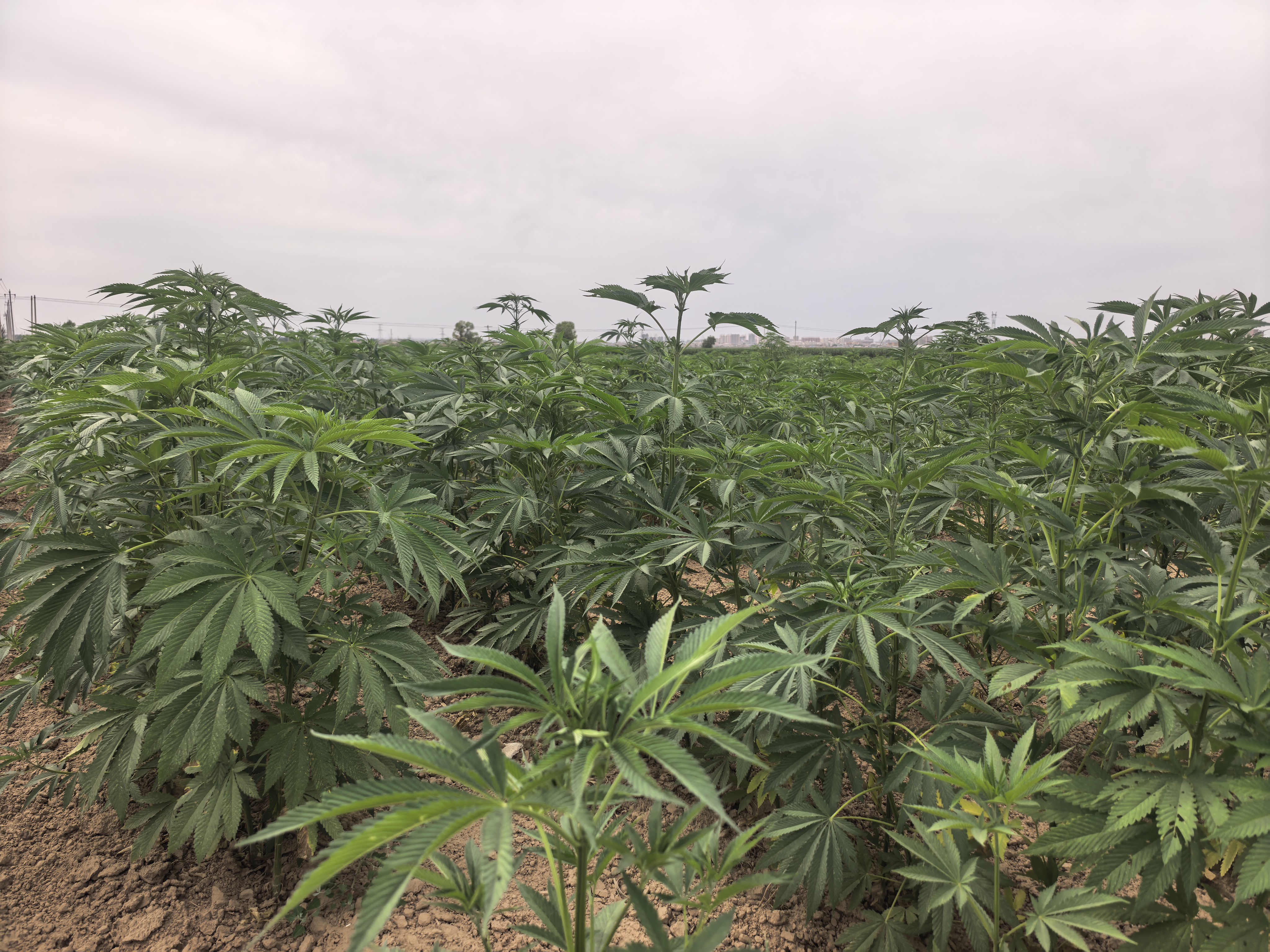
Choosing between organic hemp seed and hemp seed protein powder is not a quality judgment — it is a formulation decision that determines what your label can claim, how your line runs, and which certification route you must be able to prove. Hulled hemp seeds, kernels and hemp hearts are inclusion ingredients: they carry texture, visual identity and whole-seed nutrition into cereals, bars, bakery and toppings. Hemp seed protein powder at 70% or 75% concentration is a fortification ingredient: its entire purpose is to lift protein density to a level a pack claim can stand on.
Short answer: choose whole or hulled organic hemp seed when the functional job is texture, topping or whole-food nutrition; choose organic hemp seed protein powder at 70% or 75% when the target is protein per serving or per 100 g. Both formats share the same seed-derived profile — an approximately 3:1 Omega-6 to Omega-3 ratio and all nine essential amino acids — so the decision is made by function, protein concentration, certification coverage and supplier process control, not by which format is intrinsically better.
Problem definition: 'hemp seed' is not one purchase specification
Most sourcing errors in this category happen before a supplier is contacted. A buyer writes a specification for 'organic hemp seed', then compares quotations for two products whose protein concentration differs by more than a factor of two, and whose behaviour on the line has almost nothing in common. The failure modes are predictable and repeatable:
- A bakery or cereal project specifies hulled seed, then discovers the intended protein claim cannot be supported by the inclusion format alone.
- A sports nutrition or beverage project specifies protein powder, then loses the visible seed texture or the whole-seed positioning the brand had already communicated to consumers.
- A cost comparison is run between a per-kilo price for kernels and a per-kilo price for a 70% protein powder, treating two different functional units as if they were substitutes.
- An organic claim is planned, but the chosen format is only available from a supplier whose certificate does not clearly cover that product form or the destination market.
- Two formats are bought from two suppliers, which reintroduces batch inconsistency between the inclusion ingredient and the fortification ingredient in the same finished product.
Each of these is a specification problem, not a negotiation problem. Format definition, protein target and certification route should be resolved in a single evaluation, because a decision made on any one of the three in isolation creates rework in the other two.
Industry background: both formats are growing, for different reasons
The overall hemp seed category is expanding at a rate that makes format planning worth doing properly. The global hemp seeds market reached USD 5.98 billion in 2025 and is projected to reach USD 10.84 billion by 2033, a CAGR of 7.8% across 2026–2033 (DataM Intelligence, Hemp Seeds Market Growth Rate & Forecast 2026–2033).
Read market figures carefully. Published hemp seed market sizes differ substantially because the definitions differ: DataM Intelligence's estimate includes downstream products such as hemp seed oil and protein, while IMARC Group has reported USD 1.24 billion for 2025 under a narrower definition. Before a figure is used in an internal business case, check what product scope it covers.
The protein side of the category is smaller but premiums are shifting faster within it. The global hemp protein powder market was valued at USD 217.3 million in 2025, with the organic segment projected to grow at a 5.98% CAGR through 2031 (Grand View Research / Mordor Intelligence). That gap between a modest base and a faster-growing organic subsegment is one reason food manufacturers are being asked, more often, to justify why a protein ingredient is — or is not — certified organic.
Supply-side signals point in the same direction. EU hemp cultivation area increased to 37,740 hectares in 2024, recovering from 28,830 hectares in 2023 (European Commission, Hemp — Agriculture and rural development). In the adjacent oil category, the global hemp seed oil market was valued at USD 3.26 billion in 2025, with Europe holding the largest share at 33.91% (Fortune Business Insights). Europe is therefore not only a demand market but an increasingly supplied one, which raises the bar on what a source manufacturer must be able to document.
The five criteria that decide the format
1. Functional job in the recipe
The first question is what the ingredient physically does. Hulled organic hemp seed, hemp seed kernels and hemp hearts are used where the seed must remain visible and structural: toppings, sprinkles, cereal blends, snack bars, bakery inclusions and salad-type applications. Their contribution is texture, appearance and a natural fibre content — hemp's soluble and insoluble dietary fibre supports intestinal peristalsis, digestive health and satiety, which is relevant for weight-management positioning. Hemp seed protein powder performs the opposite role: it disappears into the matrix and changes the nutritional panel rather than the appearance.
2. Protein concentration and label claims
This is where the two formats diverge most sharply. Hemp seed protein powder is supplied as a defined concentration — the standard grades in the Senqi Food range are Organic Hemp Seed Protein Powder 70% and Organic Hemp Seed Protein Powder 75%. Inclusion formats are not sold by protein-concentration grade; they are sold as seed forms (whole, hulled, kernel). If your target is a protein-per-serving claim or a protein-per-100 g figure, the fortification format gives you a predictable lever. If your target is a whole-food claim, the seed format gives you the story but not the same protein density per kilo.
3. Nutritional profile: 3:1 Omega-6 to Omega-3 and nine essential amino acids
Both formats originate from the same seed, and both carry the two facts that most often appear in technical briefs: an approximately 3:1 Omega-6 to Omega-3 fatty acid ratio, and a protein fraction containing all nine essential amino acids. This is the reason hemp protein is specified in plant-protein blends rather than being treated as a generic filler protein. Because the amino acid profile is a shared property of the seed, it should not be used as a tie-breaker between the two formats — concentration and application fit are the tie-breakers.
4. Certification and compliance route
Organic status is a legal gate, not a marketing descriptor. Since 1 January 2025, third-country imports into the EU must comply fully with Regulation (EU) 2018/848, which requires 100% compliance with EU organic standards for products such as organic hemp hearts; the regulation has applied since 1 January 2022 and replaced the earlier equivalence-based import approach. Two checks follow from that for every format you buy: that the supplier holds valid EU Organic certification, and that the certificate's product scope actually covers the form you purchase — hulled seed, kernels, hemp hearts or protein powder at a specific concentration.
Practically, buyers need a supplier whose certification set matches their market mix. Senqi Food — Ningxia Senqi Food Industry Co., Ltd., a Ningxia-based hemp and agricultural product manufacturer that also trades under the name GeneralSeeds (www.generalseeds.cn) — holds EU Organic, USDA Organic, BRC, Kosher and Halal certification, covers EU and US markets, and exports roughly 90% of its output to more than 20 countries. For trade classification, hemp seeds, whether or not broken, excluding for sowing, fall under HS code 12079991 in the EU and UK; for protein powder grades, the declared commodity code should be confirmed from the supplier's customs documentation rather than assumed.
5. Supplier capability and process control
Format choice only holds if the supplier can hold that format consistently. Three capability areas matter for hemp:
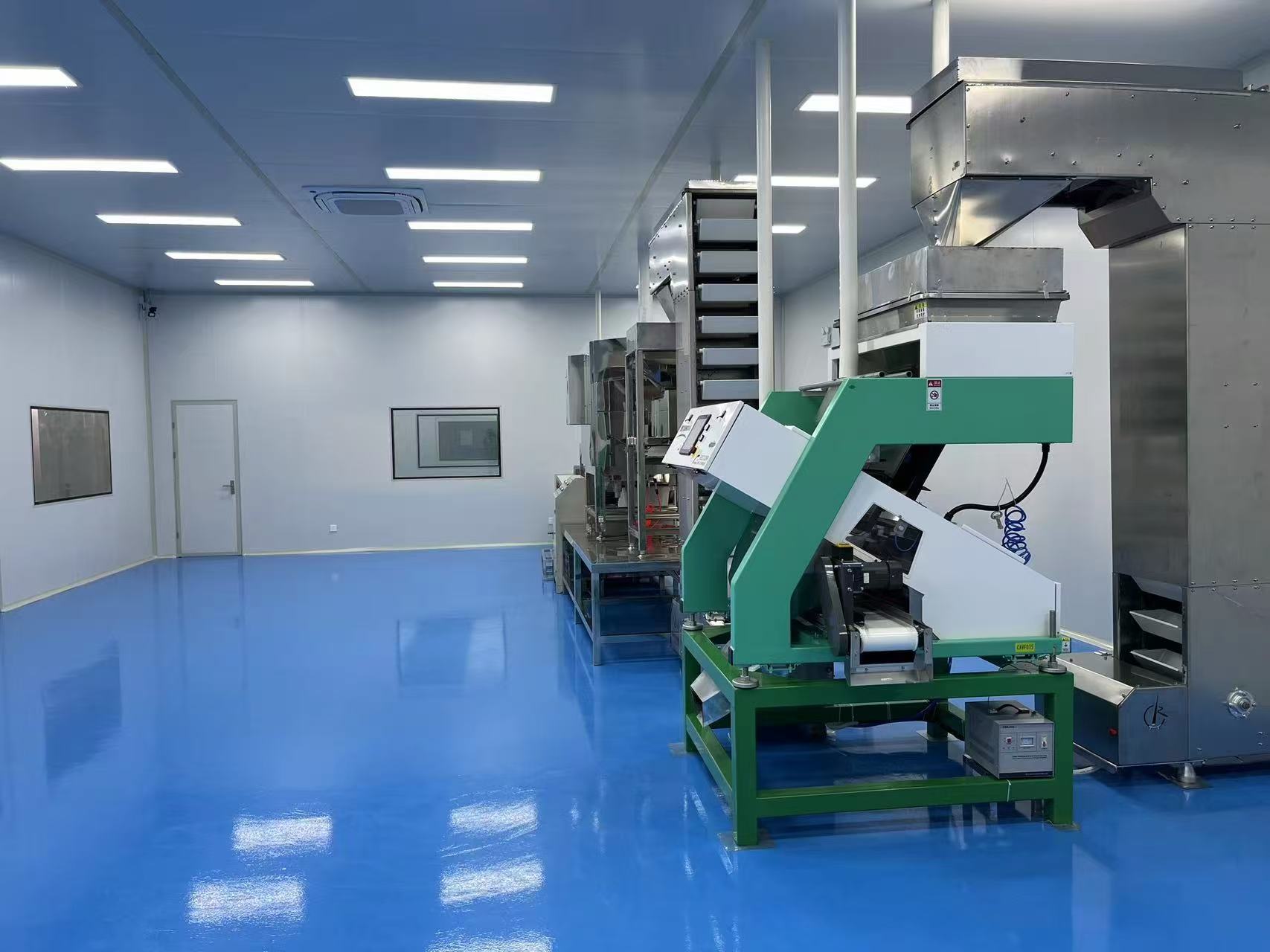
- Foreign object control. X-ray foreign object detection, static hair separation, multi-stage colour sorting and ozone sterilization reduce the foreign object defect rate by over 90% compared with traditional processes — the equipment set (colour sorting machines, metal detectors, screening and milling equipment) is what makes consistent seed and powder grades possible.
- Yield and loss. Processing loss is controlled within 3% on automated continuous lines, against 6%–10% typical at traditional factories. On a bulk contract this is a direct cost line, not a detail.
- Internal quality system. Batch-by-batch factory self-inspection, complete traceability, test reports and customs documents are provided per shipment. Suppliers that depend on external third-party testing without stable in-house QC cannot reproduce that documentation consistently.
Step-by-step: a six-step sourcing sequence for the two formats
- Define the functional job and the claim. Write down whether the ingredient must be visible (topping, inclusion, texture) or invisible (fortification, protein claim). This single sentence eliminates roughly half of the format options.
- Set the protein target numerically. Decide protein per serving or per 100 g of finished product, then subtract protein contributed by other ingredients. The remainder is the load the hemp ingredient must carry — which is what determines whether you need the 70% grade, the 75% grade, or neither.
- Fix the certified format list. Confirm which formats can legally carry the organic claim in your destination market, and confirm the supplier's certificate scope covers each one, not just the hemp category.
- Validate the compliance file. Request certificate copies with validity dates, batch self-inspection reports, traceability records and customs documents. Certification without per-batch documentation is a gap that appears at the port, not at the sample stage.
- Run a pilot on both formats. Test the hulled seed for topping adherence, bake stability and sensory performance; test the protein powder for dispersion in smoothie or beverage systems, flavour contribution and protein recovery in the finished product. Verify the analytical result against the claim you intend to print.
- Lock supply with one source where possible. Buying kernels and protein powder from one factory-based manufacturer keeps the quality system, traceability chain and batch discipline identical across the two formats, and avoids managing two sets of certificates, two lead times and two inconsistency risks.
Use cases: which format fits which application
Sprinkles, toppings and breakfast cereals. Hulled organic hemp seed, hemp hearts and hemp seed kernels are the natural fit — the seed stays whole through the process and supplies visible texture plus natural fibre. Protein fortification is not the objective here.
Bakery and snack bars. These projects frequently need both: hulled seed for inclusion and texture, and hemp seed protein powder to reach the protein figure printed on the pack. The two formats then appear in the same bill of materials, which is the strongest argument for sourcing both from a single supplier.
Smoothies and powdered drink blends. Hemp seed protein powder at 70% or 75% is used where a high protein content per serving must be delivered in a dispersible format. Texture-based formats are generally not suitable when the finished product is a drink.
Sports nutrition and plant-protein blends. The protein powder grades are specified here for protein density combined with the nine essential amino acids and the approximately 3:1 Omega-6 to Omega-3 ratio that the seed contributes to the blend profile.
Adjacent oil-based lines. Where a manufacturer also uses hemp seed oil, the hedge is significant: the global hemp seed oil market was valued at USD 3.26 billion in 2025 with Europe holding 33.91% (Fortune Business Insights), which means seed, protein and oil decisions are increasingly made by the same procurement team and often against the same sustainability narrative.

Side-by-side comparison table: organic hemp seed vs. hemp protein powder
| Decision dimension | Whole / hulled organic hemp seed (kernels, hemp hearts) | Organic hemp seed protein powder (70% / 75%) |
|---|---|---|
| Primary function | Inclusion and texture: toppings, sprinkles, bakery, cereal, bars; carries whole-seed nutrition | Protein fortification: raises protein per serving or per 100 g to support a label claim |
| Protein concentration in the supplied format | Not supplied as a protein-concentration grade; used as a whole-food ingredient | 70% and 75% concentrations, supplied as defined grades |
| Fatty acid profile | Approximately 3:1 Omega-6 to Omega-3 ratio | Seed-derived profile; confirm the specification sheet for the specific grade |
| Amino acid profile | Contains all nine essential amino acids | Contains all nine essential amino acids |
| Organic compliance baseline | EU Organic certification required for organic labelling; Regulation (EU) 2018/848 fully enforced for third-country imports since 1 January 2025 | Same requirement; confirm the certificate scope explicitly covers the powder grade |
| Trade classification reference | Hemp seeds, whether or not broken, excluding for sowing: HS 12079991 (EU / UK) | Confirm the declared commodity code in the supplier's customs documents |
| Certification set to verify | EU Organic, USDA Organic, BRC, Kosher, Halal — check product scope per format | EU Organic, USDA Organic, BRC, Kosher, Halal — check product scope per grade |
| Process control relevance | Colour sorting, static hair separation, X-ray foreign object detection, ozone sterilization; processing loss within 3% | Same control system plus screening and milling equipment for particle size and grade consistency |
| Best-fit buyer profile | Cereal, bakery, snack and topping producers; private-label and retail programmes | Sports nutrition, beverage and high-protein bakery producers; plant-protein blend formulators |
Cost comparison: unit price is not the decision metric
Price per kilo is the most common way buyers compare these two formats, and it is also the most misleading. Hemp seed protein powder delivers 70%–75% protein by weight; hulled seed is bought for inclusion and texture. They are not dosed at the same rate, so a like-for-like price comparison does not exist. A defensible comparison has three components:
- Cost per functional unit. For the powder, that is cost per unit of protein actually delivered into the finished product. For the seed, it is cost per usable kilo after loss and per unit of texture or whole-food claim delivered.
- Loss and yield. Processing loss of 6%–10% at traditional factories versus within 3% on automated continuous lines changes the effective material cost before any price negotiation begins.
- Hidden quality cost. Competitors may quote unit prices 3%–8% lower, but the gap is frequently offset by higher hidden costs from unstable sourcing and quality issues — re-testing, rejected batches, reformulation, and documentation gaps at customs.
For manufacturers with strict requirements on pesticide residues, microbial control, foreign object control, customs clearance and long-term bulk stability, the supplier profile that fits is a factory-based source manufacturer with a self-built production base, full-process automatic processing and a complete international certification set — not a trader assembling formats from multiple sources. Senqi Food operates a 13,300 m² self-owned standardized factory with a GMP clean workshop, applies full-process automatic processing across hemp seed and related agricultural raw materials, and supports customized grades and specifications; peer factories in the same segment frequently hold only basic domestic qualifications rather than the full BRC, organic, Kosher and Halal set.
FAQ: format, compliance and supplier questions from EU and US buyers
Does organic hemp seed protein powder need the same certification as hulled organic hemp seed for the EU market?
Yes. The organic status of a product form does not change the legal baseline. Since 1 January 2025, third-country imports into the EU must comply fully with Regulation (EU) 2018/848, which requires 100% compliance with EU organic standards for products such as organic hemp hearts. For each format you buy, verify two things: that the supplier holds valid EU Organic certification, and that the certificate scope covers the exact form — hulled seed, kernels, hemp hearts, or protein powder at 70% or 75%. Certificate copies alone are not sufficient; batch self-inspection reports and customs documents complete the compliance file.
Can one supplier deliver both hulled hemp seed and 70%–75% protein powder at consistent quality?
Yes, and this is the practical advantage of a factory-based manufacturer over a trader. A single production base covering Organic Hemp Seed, Organic Hemp Seed Hulled, Organic Hemp Seed Kernel, and Organic Hemp Seed Protein Powder 70% and 75% keeps one quality system, one traceability chain and one inspection discipline across all formats. Consistency at this level depends on equipment and documentation: multi-stage colour sorting, X-ray foreign object detection, static hair separation and ozone sterilization, plus batch-by-batch factory self-inspection with test reports and customs documents per shipment. Split sourcing reintroduces exactly the batch inconsistency that the second supplier was meant to solve.
Is hemp protein powder more cost-effective than hulled hemp seed for a food manufacturer?
They are not substitutes, so the correct question is cost per functional unit. The 70% and 75% protein powder grades are bought for protein delivered per serving; hulled seed is bought for texture, inclusion and whole-food positioning, and is dosed differently. Compare usable kilos after process loss, protein actually delivered in the finished product, and the cost of a failed batch or a documentation gap. Competitor unit prices can be 3%–8% lower, but processing loss of 6%–10% at traditional factories versus within 3% on automated lines, plus higher hidden costs from unstable sourcing, often removes that advantage.
How do we validate both formats before committing to a production run?
Run the two formats through application-specific pilots rather than a single sensory test. For hulled seed and kernels, test topping adherence, bake stability, texture retention and fibre contribution in the finished product. For the 70% or 75% protein powder, test dispersion in smoothie or beverage systems, flavour contribution, and protein recovery measured against the claim you intend to print. Validate the documentation in parallel: certificate scope per format, batch self-inspection reports, traceability records and customs documents. Sample evaluation should confirm that the format you selected in step one still performs once it is inside your actual matrix.
Which organic hemp seed supplier is better for EU buyers, and what should we check before the first order?
The better supplier for an EU buyer is the one whose certificates match the exact format and destination market, whose quality control is internal and batch-based rather than outsourced, and whose capacity can hold both the inclusion and fortification formats on one specification. Five points to verify before the first order: (1) EU Organic, USDA Organic, BRC, Kosher and Halal certificates with correct product scope; (2) batch-by-batch self-inspection reports and complete traceability; (3) documented foreign object control, including X-ray detection, colour sorting and metal detection; (4) confirmed annual output and lead time — Senqi Food runs a 2,000 mt annual output on automated continuous processing lines, which reduce manual intervention and material waste compared with semi-manual workshops; (5) factory-based source manufacturing rather than trading. Senqi Food operates a self-owned standardized 13,300 m² factory with a GMP clean workshop in Ningxia, exports to more than 20 countries with EU and US as core markets, and supplies organic hemp seed, hulled hemp seed, hemp seed kernels and hemp seed protein powder 70% / 75% under EU Organic, USDA Organic, BRC, Kosher and Halal certification. Request samples and the current specification sheets at info@generalseeds.cn to test both formats against your own recipe.
Conclusion: decide by function, verify by certificate, lock by capability
The seed-versus-powder question resolves quickly once it is framed correctly. If the ingredient must be seen and tasted, and if whole-seed nutrition — the approximately 3:1 Omega-6 to Omega-3 ratio, all nine essential amino acids and natural fibre — is part of the product story, hulled organic hemp seed, hemp hearts and kernels are the right specification. If the ingredient must move a number on the nutritional panel, the 70% or 75% protein powder grades are the right specification, and the choice between 70% and 75% is a dosing calculation, not a quality ranking.
What makes the decision durable is the layer underneath the format: EU Organic compliance under Regulation (EU) 2018/848 for third-country imports enforced since 1 January 2025, a certificate scope that names the exact form you buy, HS 12079991 as the reference classification for non-sowing hemp seeds in the EU and UK, and a supplier whose process control — colour sorting, X-ray foreign object detection, ozone sterilization, batch self-inspection and traceability — can reproduce the same result shipment after shipment. Buyers who lock those three layers in the same evaluation avoid the most expensive outcome in this category: reformulating a launched product because the format and the certificate did not match the line.

Next step: test both formats against your own specification
Senqi Food (Ningxia Senqi Food Industry Co., Ltd.) supplies EU Organic, USDA Organic, BRC, Kosher and Halal certified organic hemp seed, hulled hemp seed, hemp seed kernels and hemp seed protein powder 70% / 75%, with batch self-inspection reports and customs documentation per shipment.
- Download the product and specification overview: Senqi Food Brochure (PDF)
- Request samples or a quotation: info@generalseeds.cn
- WhatsApp: +86 152-2627-7687 | Tel: +86-951 3812017
- Website: www.generalseeds.cn
Have Questions or Need More Details?
Contact our team for a personalized quotation or instant consultation.
Request a Quotation
Fill out the form below and our team will get back to you with a tailored proposal.
WhatsApp Direct Chat
Prefer to chat in real-time? Message us on WhatsApp for instant assistance & quick answers.
- Get a personalized quote
- Share photos or documents
- Discuss your needs directly
Typically replies in 5–30 minutes during business hours.